

Snap it
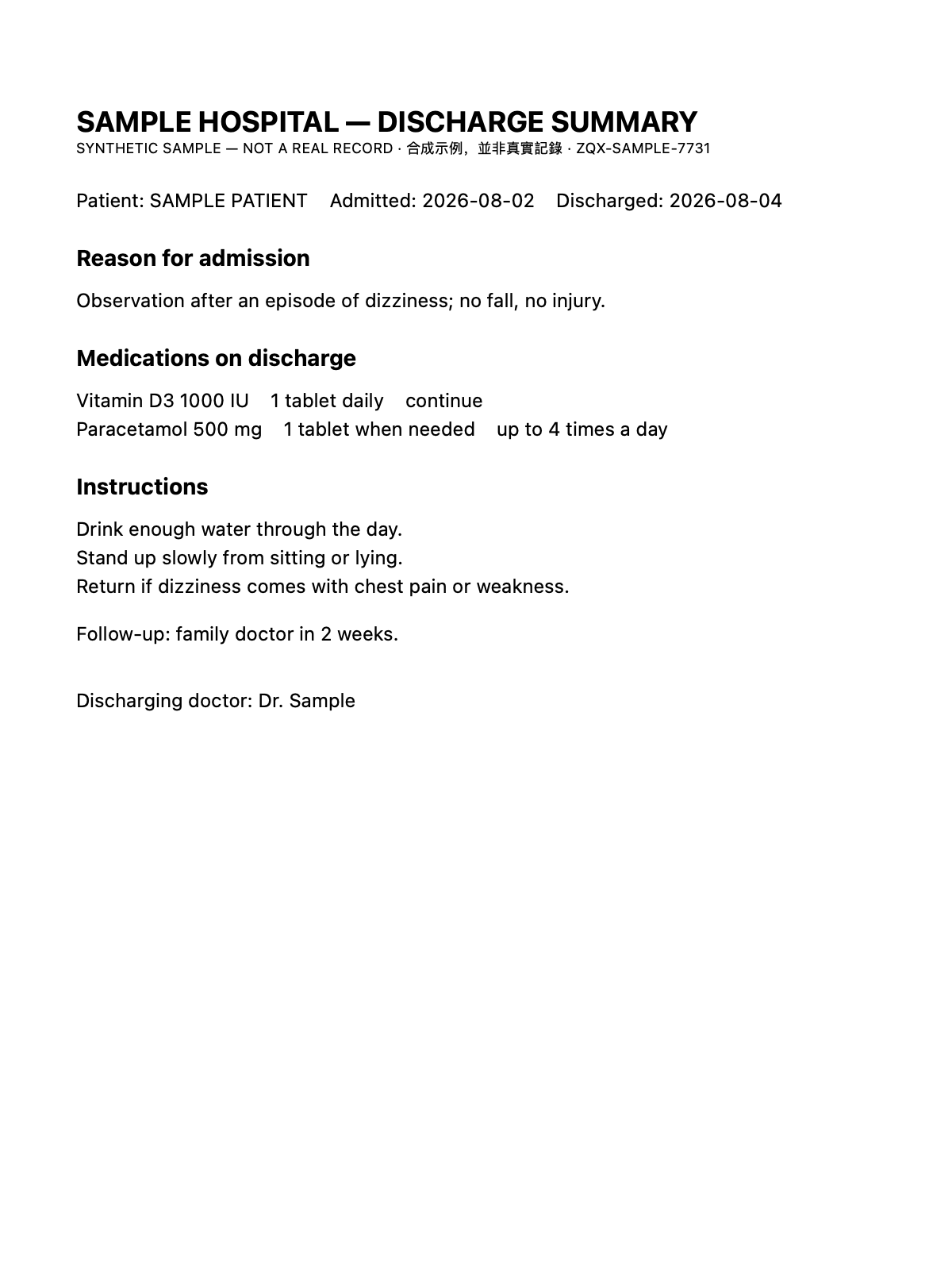
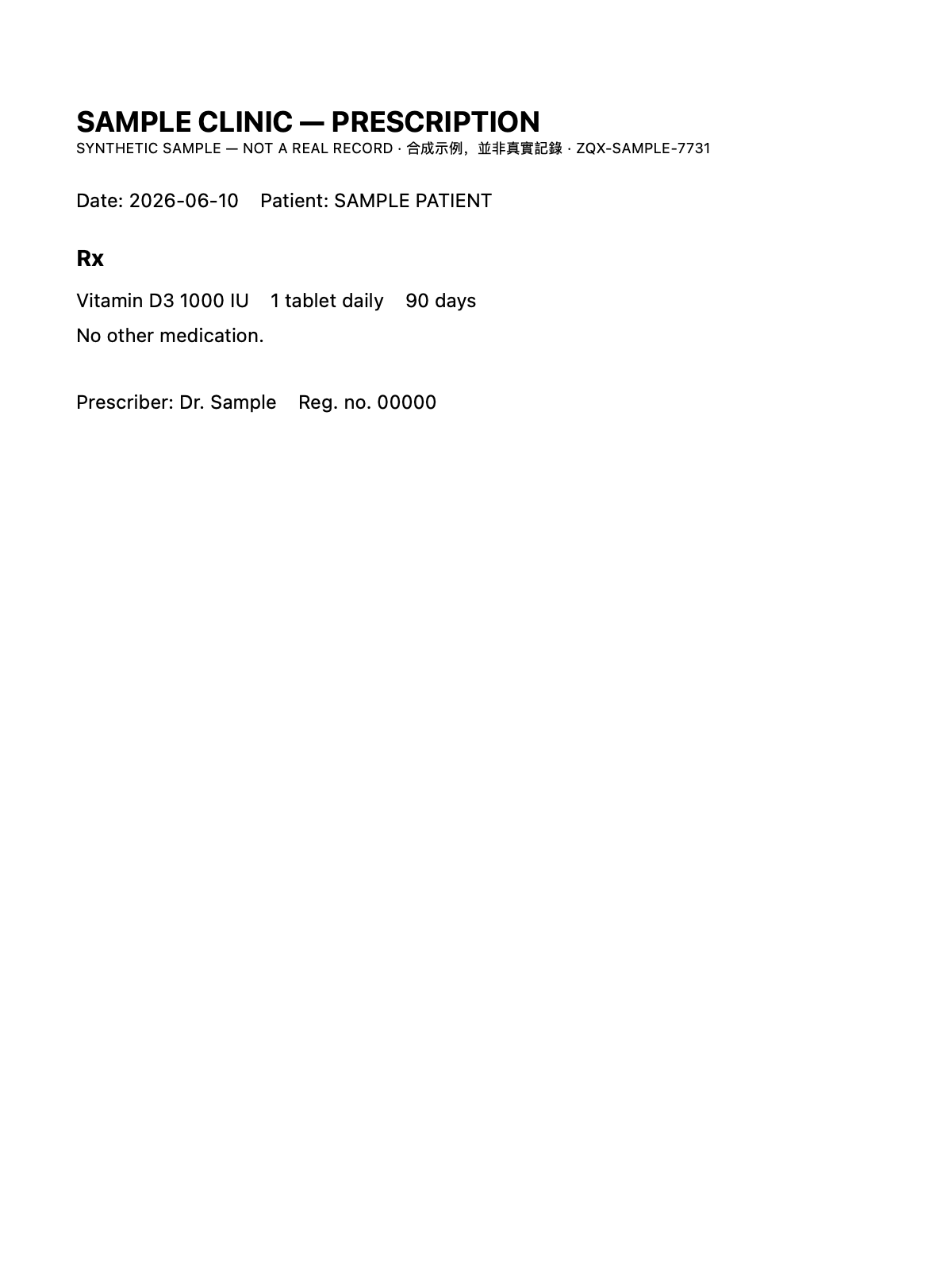
Lab reports, letters, labels, screenshots and chat images. Handwritten, English or Chinese, a bit blurry: all fine.
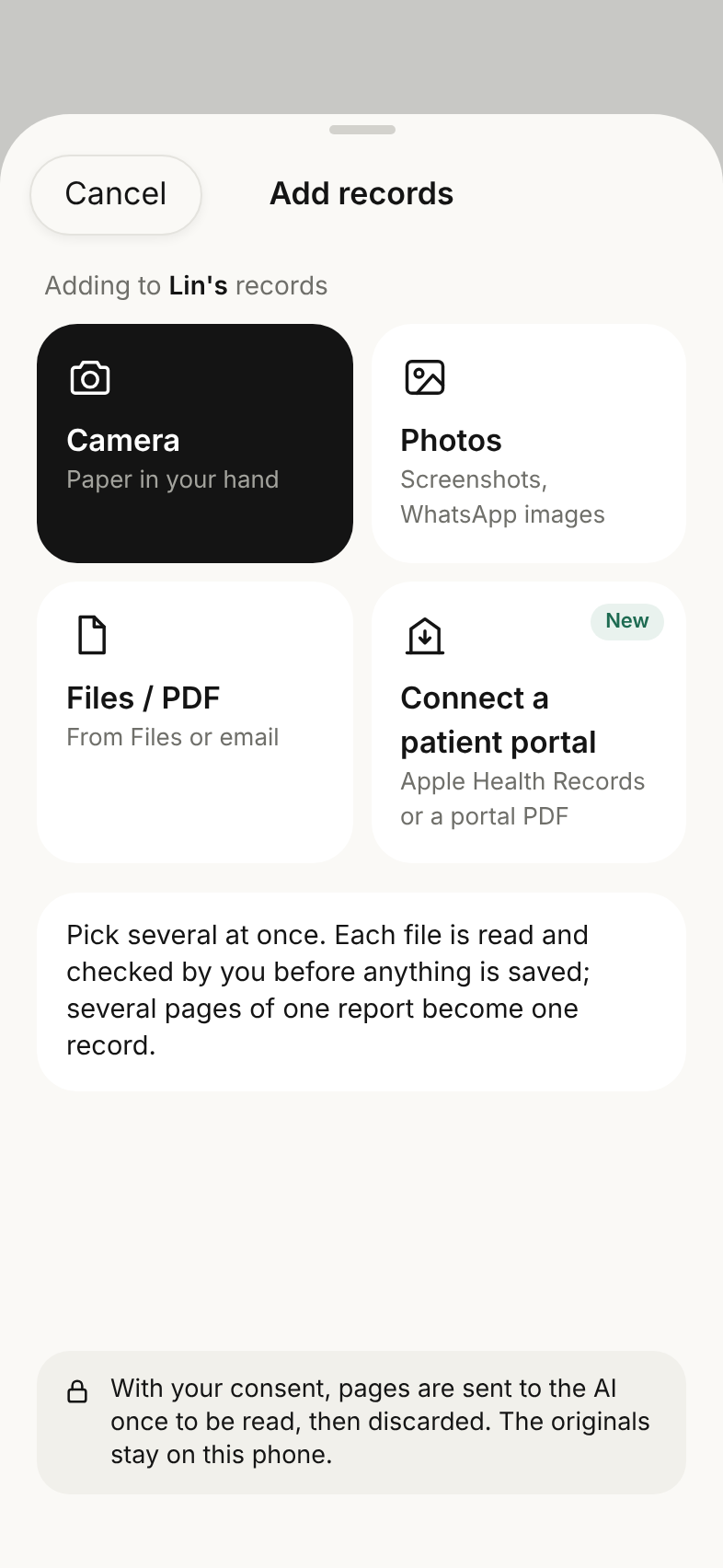
Photograph any record (a lab report, a specialist's letter, a pharmacy label) in any language. See one timeline. Ask, and every answer shows where it came from.

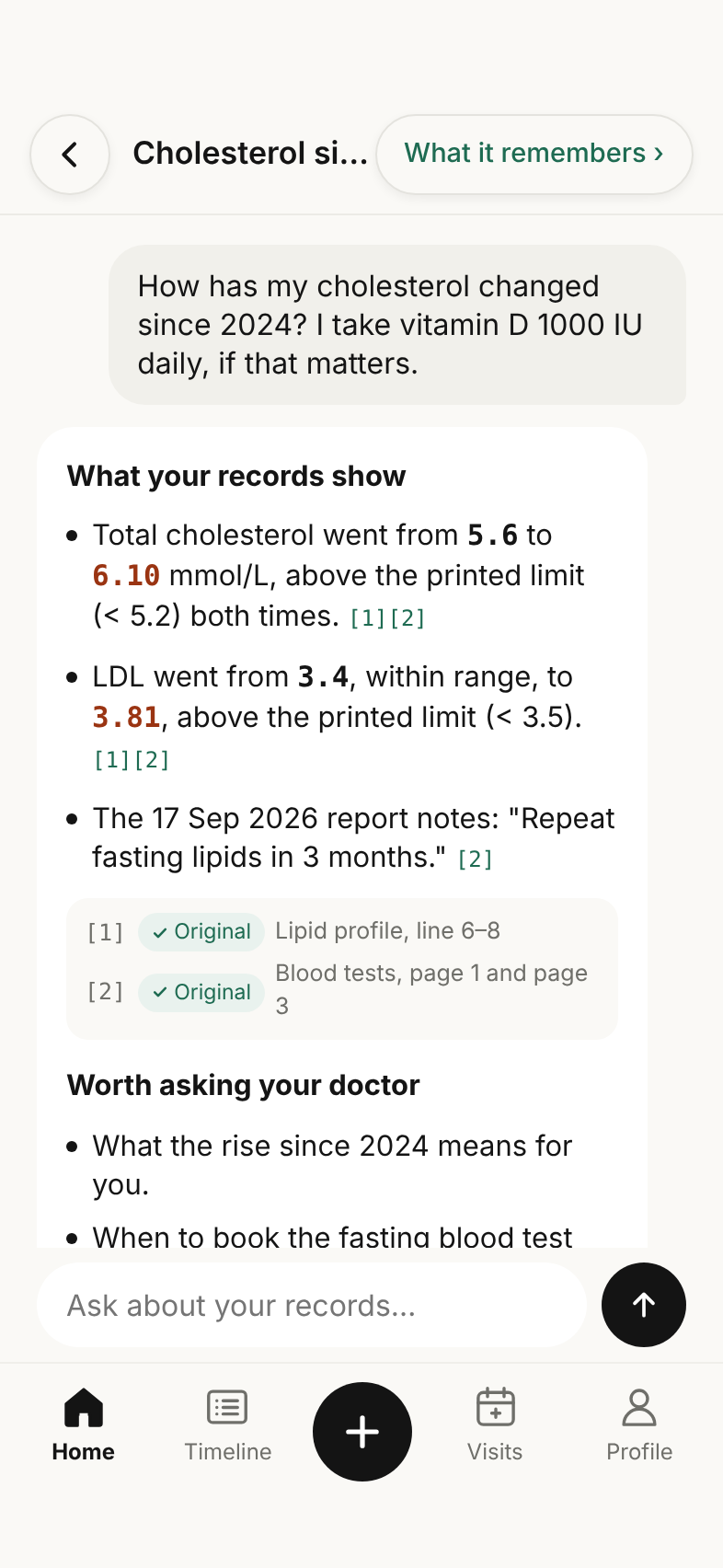
Product screens with synthetic sample records.
Lab results sit in one portal, a specialist's letter on paper, a pharmacy label in a drawer and a report from overseas in another language.
So when the doctor asks "what was it last time?", the answer is somewhere in the shoebox, and often it belongs to a parent you're caring for.
of people in the US have more than one patient portal or online record.1
used an app to bring those portals together.1
family caregivers in the US, one in four adults, many keeping track of someone else's records.2
Lab reports, letters, labels, screenshots and chat images. Handwritten, English or Chinese, a bit blurry: all fine.
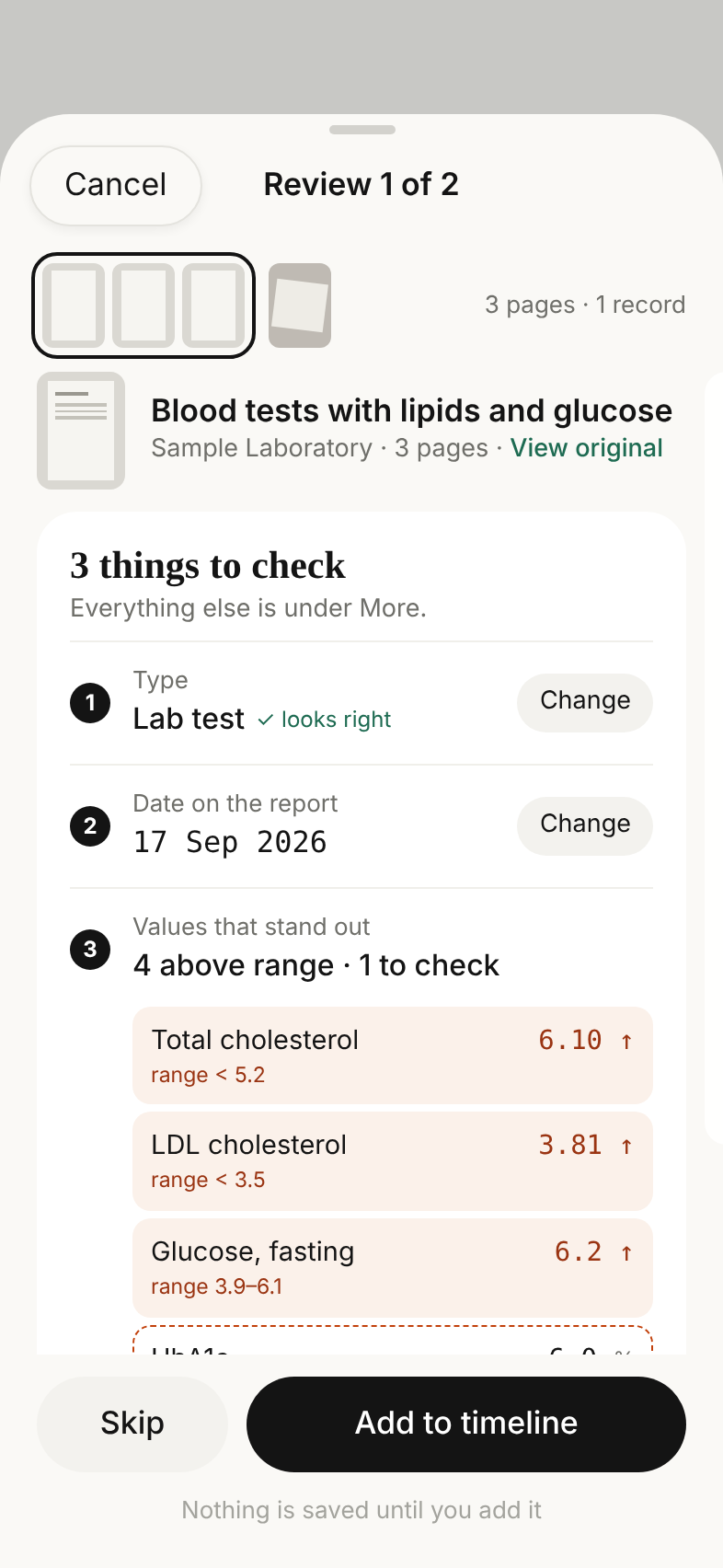
The AI reads each page and shows what stands out. You confirm every value before anything is saved.
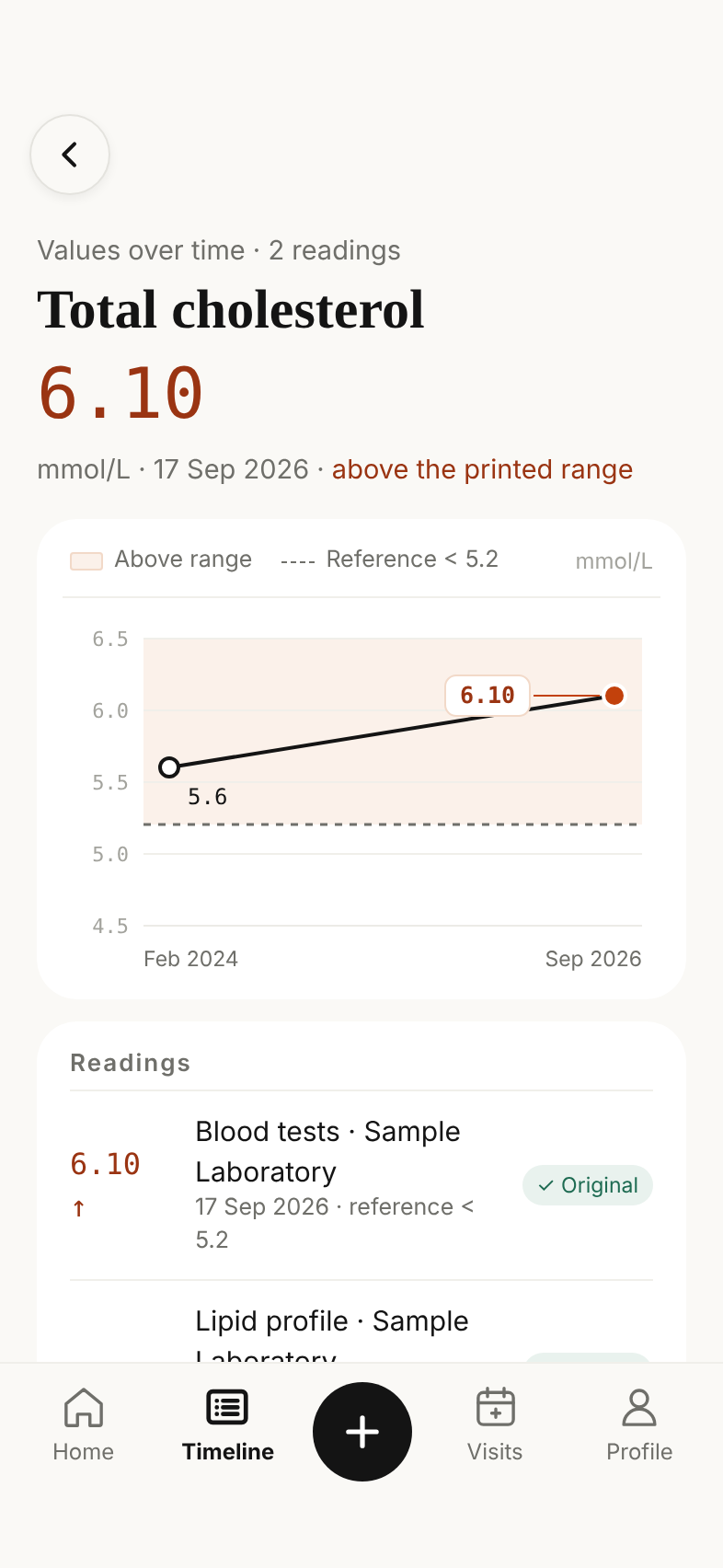
Every record lands on one timeline. Values line up across reports against the lab's own printed range.
A one-page summary and PDF for the doctor, with the questions you meant to ask.

Every health statement points to the record it came from, one tap from the original page. When something isn't in the records, the app says so instead of guessing.
An answer that can't cite one of your records isn't shown.
Gaps are named, so you know what to add or what to ask.
It compares, summarises and lists questions for your doctor. Decisions stay with you and your clinician.
For information only; not medical advice.
Read from a document you added. One tap opens the page.
What a clinician told you, saved in your words.
What you told the app, kept separate and marked as yours.
Lab reports, letters, prescriptions, scans and notes in date order, each one tap from its original.
See how a value has moved across reports, next to the lab's own printed range. Values are shown exactly as printed.
A one-page summary and PDF for the doctor, what changed since last time, and your questions in one list.
Up to five family profiles, each kept separate, so a parent's records never mix with yours.
Mention a supplement in chat and it's saved as a self-reported note, with Undo right there.
A Chinese clinic note and an English lab report on the same timeline, read in English, Traditional or Simplified Chinese.
On iPhone, records, original pages and chat history stay on the device and in your own iCloud. The AI sees only what you allow, one request at a time.
This describes the iPhone app. The web version is in testing with synthetic sample data only.
One switch lets the AI read documents, another lets it answer questions. Each person, each purpose.
One document to be read, or your question with a few selected facts, and only when you ask.
For North America, AI requests go to AWS in Canada. Neither AWS nor our servers store them, and they aren't used for training.
Face ID app lock is on by default, and records are encrypted on the phone.
An activity log shows every trip to the AI. "Delete everything" removes the phone, iCloud and account copies.
Health data is never used for advertising or shared without your consent.
Paper, faxes, pharmacy labels, specialist letters, reports from overseas and messages in the family group chat are in no portal. That's where families who care across languages spend their time.
Multilingual caregivers: adult children keeping track of a parent's records across languages and countries. Canada first, then the US.
People already ask AI about their health, but they can't check the answers. HealthTimeline answers only from the person's own records, with the source on every line.
We add a few synthetic records, build the timeline, ask a question and check every source together.
It's built not to be one. Our intended use: HealthTimeline helps individuals organise their own medical records, see them in one place, and prepare informed questions for their healthcare providers. It does not diagnose, treat, or direct the management of any condition.
In the iPhone app, on your phone and in your own iCloud. Our servers don't keep them. When you allow it, one document or a few selected facts go to the AI for a single request; in North America that request is processed in Canada, isn't stored and isn't used for training.
Photos, screenshots and PDFs: lab reports, letters, prescriptions, pharmacy labels, discharge summaries, vaccination cards and messages from a clinic, in English, Traditional Chinese or Simplified Chinese. You check every value before it's saved.
There will be a free tier, with paid plans for heavier use and for families. Pricing will be set before launch.
We're preparing a family beta with caregivers in Canada. Ask to join, or book a demo to see it first.
HealthTimeline isn't for emergencies. If a question mentions warning signs such as chest pain or trouble breathing, the app shows the emergency number (911 in North America) before anything else.